

Computer Science may seem like a purely Engineering subject, but now College, Wharton and even Penn Law students can get in on the action.
In a new integrative and discussion-based course — CIS-125 Technology and Policy — undergraduate and graduate students grapple with the legal issues that relate to the advancement of technology, according to Engineering professor Jonathan Smith.
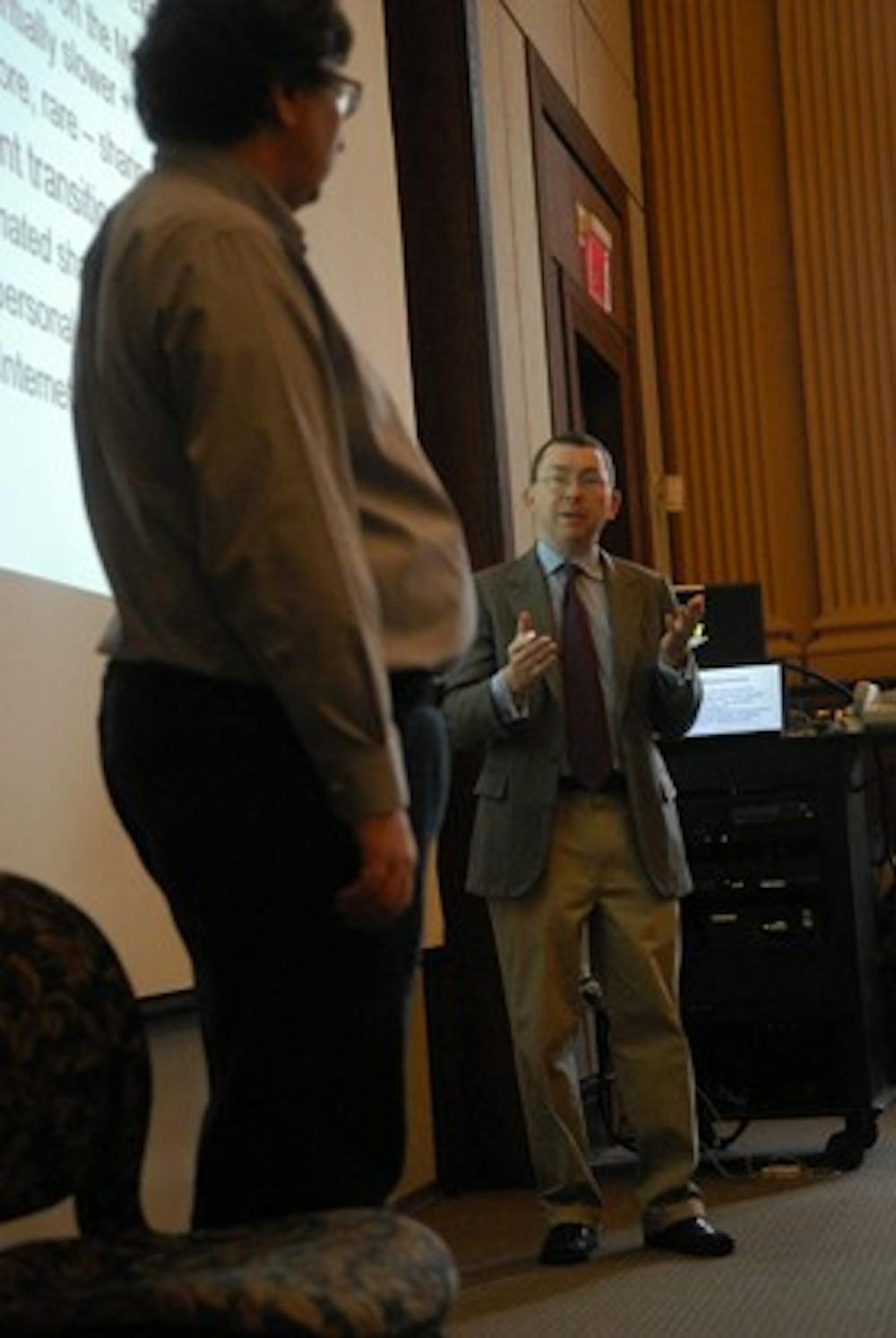
The course is co-taught by three professors: Smith, Computer and Information Science professor Matthew Blaze and tech-savvy Law professor Christopher Yoo.
The impetus behind creating this course, Smith explained, came from the observation that a lot of his and Blaze’s work in computer networking and security have had many interactions with regulation and legal issues.
Smith said they then reached out to other people within the University and were “amazed” that so many expressed an interest in these issues.
When Yoo suggested that they co-teach a Technology and Policy course, incorporating his experience in law, the idea for CIS-125 was born.
According to Yoo, some of the issues that affect students today in the realm of technology and policy deal with digital-rights management, network neutrality and the online piracy of live television. Yoo testified in front of Congress concerning digital-rights management.
Smith emphasized that the class is designed to be more like a seminar than a lecture.
Students and co-professors alike are encouraged to share observations and pose questions whenever they feel inclined to do so.
The course also incorporates a blog component, where students can discuss the current interactions of policy issues and technology.
The only pre-requisite for the course, Smith said, is curiosity.
College junior Aaron Bloomfield said there are at least two professors present every class, and it was interesting that they would switch midway through the lecture and interrupt each other. He also said the professors respond to every blog post.
“I’ve already encouraged a friend of mine to take the course, and he enjoys it — and he’s not a Comp Sci major either,” Engineering senior Samuel Riggs said of CIS-125.
Law student Stephanie Hoffmann noted the importance of understanding the way policy and technology work.
“This class really aims to ensure everyone walks out with that understanding,” she said.
Smith described the course as being a perfect example of Penn President Amy Gutmann’s agenda — “Penn Integrates Knowledge.”

