

$542: The maximum monthly food stamp allotment for a family of four.
$121.93: The monthly deficit this family would face if it shopped for nutritious goods at the average Philadelphia super market.
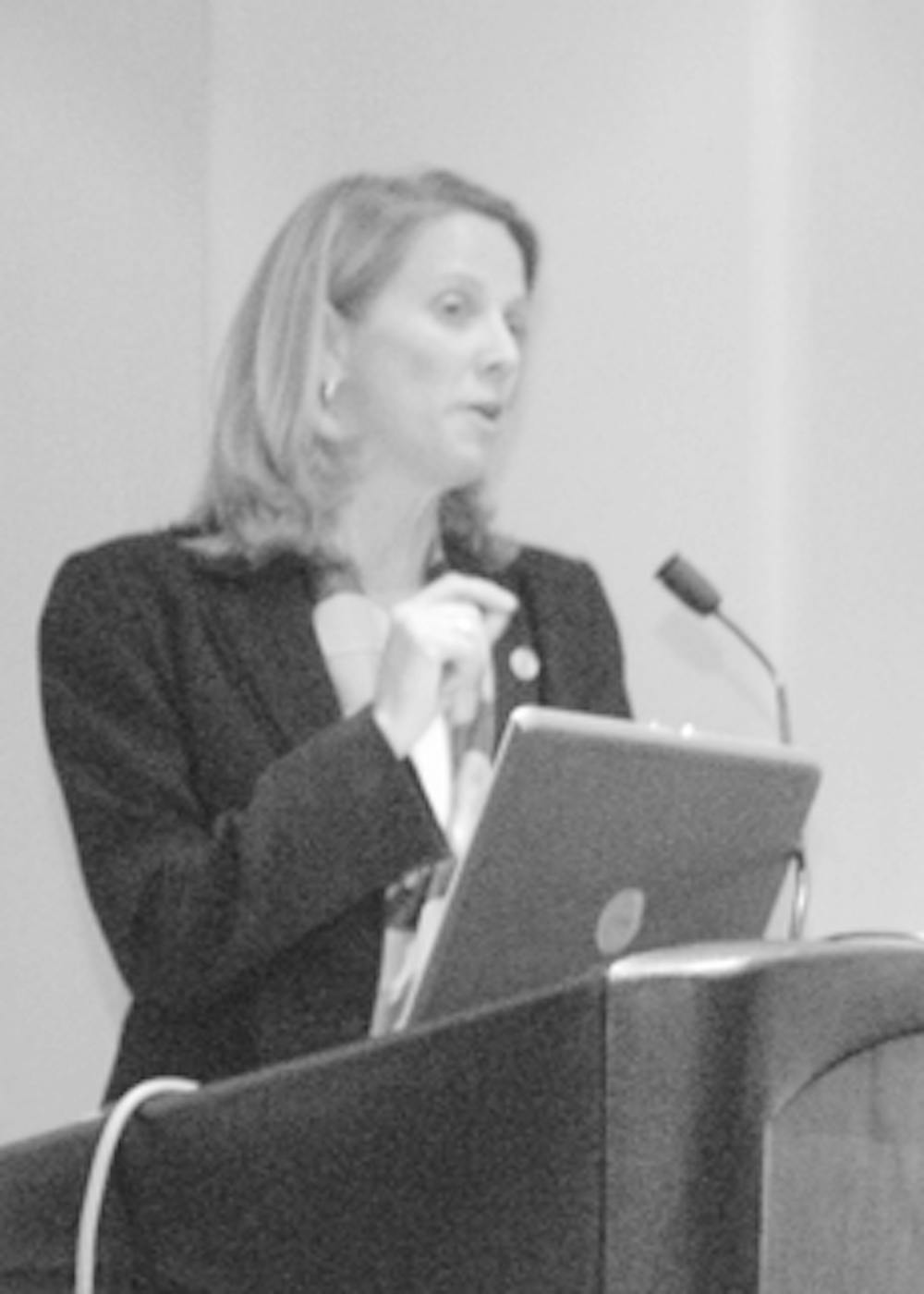
This was just one of the many stark facts Mariana Chilton of the Drexel University School of Public Health presented in her seminar "Hunger in Philadelphia? Evidence of Food Insecurity in the Midst of an Obesity Epidemic" yesterday at Houston Hall.
The seminar, part of the Public Health Research in Action Speakers Series sponsored by Penn's Center for Public Health Initiatives, focused on the growing "food insecurity" among low income households, especially among children. Food insecurity, which includes uncertainty about future meals and insufficient food supply, is particularly severe in Philadelphia where one in three children live in poverty and are highly at risk.
Chilton, as the Principle Investigator for the Philadelphia Grow Project, addressed these issues as well. The Grow Project, based at St. Christopher's Hospital for Children, works with underweight children to help bring them to a normal weight. There is an eight-week waiting list.
"Food insecurity is bad for health, bad for development" and can affect children socially and cognitively, said Chilton. According to Chilton, underweight babies are more prone to an obesity in adulthood.
Some have also made a connection between food insecurity and obesity, especially among women. Although existing research is insubstantial, many theorize that the connection stems from a lack of access to fruits and vegetables, reliance on "cheap calories" or stress.
Students and community members found the seminar eye opening. "I'm here for extra credit for my Community-Based Environmental Health class" said College freshman Rachel Thomas, "but I found it really interesting."
Chilton hopes members of Congress find the issue equally important, as she lobbies for increased food stamp allotments and works with the Farm Bill.
"Food insecurity doesn't necessarily manifest in overweight or underweight. Just because you can't see it doesn't mean the problem isn't there," warned Chilton.

