Elizabeth Song | Putting on the Ritz

Students must pay attention to how Penn's retail choices affect prices - and development - in the area

· December 5, 2007, 5:00 am

Share This

Welcome to University City, land of the $4 Starbucks latte and home of the $48 American Apparel sweatshirt. The 300 acres of land that Penn owns in University City rise above the desolate, crime-ridden lands of West Philadelphia like the Emerald City over Oz. And our glorious president, Amy "the Good Witch" Gutmann, has blessed us with a bevy of chic retail options.

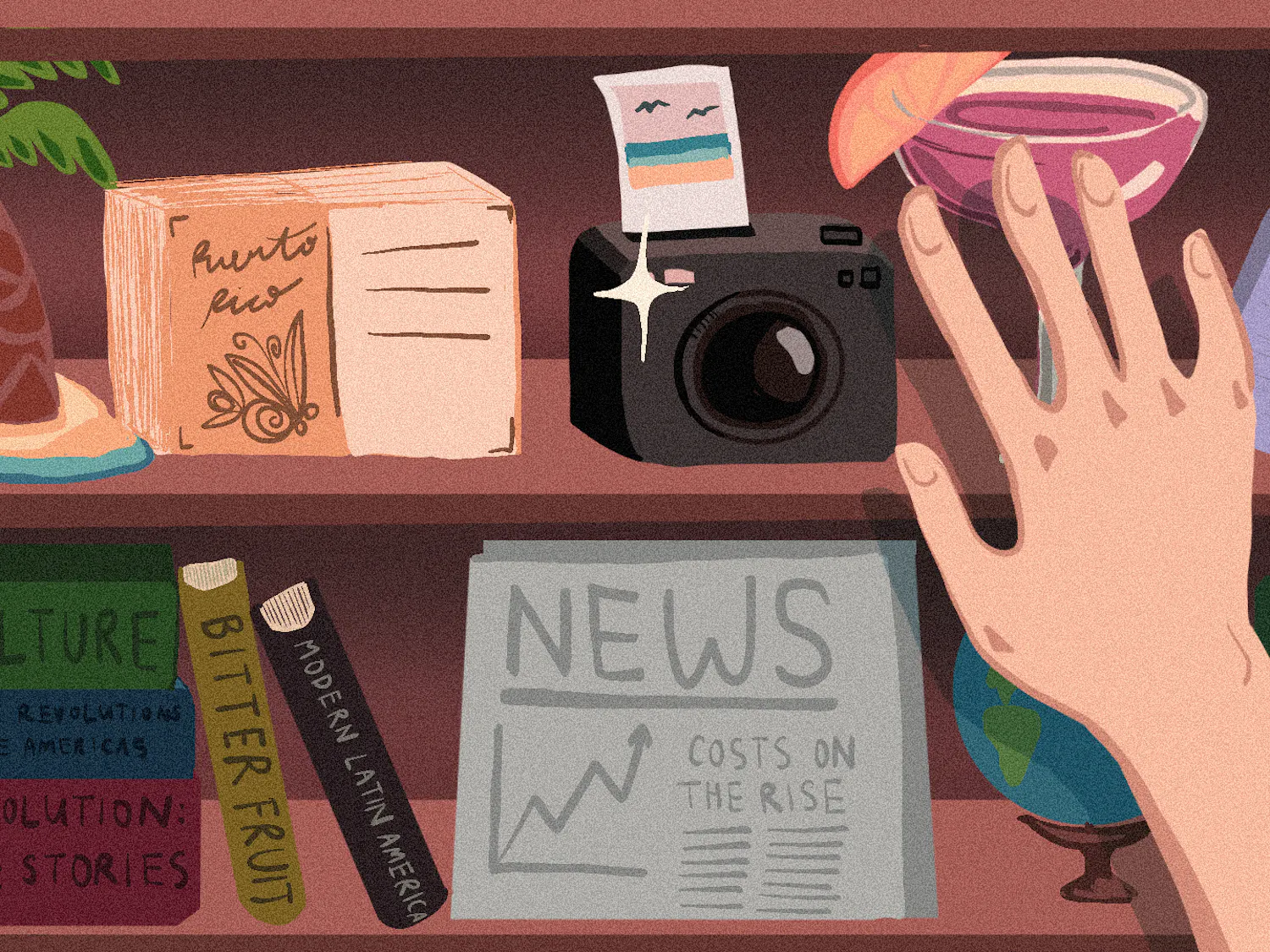
Just amble down Walnut Street to Cereality, where you can munch on a $4 take-out box of cold cereal. For a few bucks more, you can even grab that $6 box of Cinnamon Toast Crunch from C3. And you can't be a proper Penn student without Penn gear - so head to the Penn Bookstore, which is run by retail giant Barnes & Noble.

Ever wonder why you have to cough up $50 for a Penn hoodie?

Look no further than the University's drive to reap profits. By cultivating an upscale retail monoculture on campus, the University is gouging students to gild its own coffers. Penn alum Matt Ruben, who graduated last year with a doctorate in Urban Studies, examines this trend in Campus, Inc.: Corporate Power in the Ivory Tower. According to Ruben, universities can strike business deals to milk profits from their "captive audience" of students, faculty, and staff.

Here's how it works: the University leases land or space to a business. Penn tries to squeeze as much money as possible out of the deal by charging higher rents. These high rents get passed on to the consumer - that means you - through higher prices.

Awarding one business a reliable revenue stream, like granting a monopoly on Penn apparel, allows the University to extract higher rents in return. It's an act of corporate calculus that belies the University's 301c non-profit tax status.

But the milking doesn't stop there. Lost your gamble on that much-coveted '03 suite in Harnwell? No worries: Take advantage of the trendy luxury apartment buildings that are popping up like mushrooms, with sleek, postmodern names like Radian and Domus. Too bad if you can't afford the $1300 monthly rent. Guess you'll just have to settle for a shady off-campus apartment.

Not only is the corporate landscape bad for cash-strapped students - it also bleeds the local community. Penn, which went on a land grab in the 1960s, failed to immediately develop these properties, leaving them empty lots and hotbeds for crime.

The high rents that the University set also discouraged local, blue-collar businesses from moving on campus. In their place, we got corporate mega-chains like Au Bon Pain, Barnes & Noble, and Urban Outfitters.

As a result, University City has become a Center City in miniature, with its steep prices.

Every campus has a place for a Gia Pronto's or a Sheraton, but we should have a choice of businesses that cater to a variety of income levels. As one of the area's largest landowners, the University has the all-important power of setting rents. And as the campus moves closer to Center City during eastward expansion, Penn should encourage local, independent businesses in place of corporate monoliths.

Penn has its own reasons for encouraging upscale retail: it plays into the University's marketing image as a cosmopolitan campus. It's "how the University maximizes revenue and maintains the prestige of its brand," Ruben told me.

The University's ploy to boost profits isn't unilaterally bad. While these strategies have the valid aim of cutting costs, they shouldn't be pursued at the expense of Penn's most important constituents - the students. Especially when we're paying $45,000 to be here.

Students make easy targets because we retain so little institutional memory. According to Ruben, "if the price on campus goods goes up 20 percent, you have a new crop of freshmen who never knew the difference."

But students don't always have to serve as cash-cows for universities.

About a decade ago, a diverse ad hoc coalition of students, faculty and vendors successfully rallied against the University's attempts to systematically erase the presence of food trucks from campus. They collected 10,000 signatures on a petition, and thanks to their efforts, students today enjoy a variety of low-cost alternatives to Aramark.

We need to continue to resist our transformation into passive consumers. Remaining oblivious to the corporate landscape on campus simply isn't an option.

Elizabeth Song is a junior from Clemmons, N.C. Her e-mail address is song@dailypennsylvanian.com. Striking a Chord appears on alternating Wednesdays.
Comments (10)

William Song

December 31, 1969, 7:00 pm

Flag this comment

You know, Lizz (I'm your brother for god's sake) you should probably take the advice from these people, and not go willy nilly with your writing.

John

December 31, 1969, 7:00 pm

Flag this comment

Ever think Penn engages in inefficient practices? Like those ever so necessary security guards checking our bags in Van Pelt (do they check? Does it matter? a 2 sec. glimpse into your bag reveals nothing). Penn's "commitment" to the neighborhood in providing pointless jobs costing thousands of dollars in salaries also plays a part in needing to squeeze out extra pennies from students. Buy a 20 dollar coffee pot, make your own coffee, buy a box of cereal and milk - use a bowl in your place instead of cereality. Elizabeth: make your own choices. No one is forcing you or me to buy a Penn sweatshirt.

Rob

December 31, 1969, 7:00 pm

Flag this comment

This editorial reads as though it were written by someone who "went to school in Philly" but never set foot off of campus. When I was a student (graduated in '00), the retailers on Penn's campus were very much like the ones described in the editorial. If you didn't like them (I didn't), you walked off campus. Want cheap, good food? Go west and try the Clark Park farmer's market, or Dahlak, or any of a bunch of great soul food places down baltimore ave (admittedly my two favorite eateries - Koch's and the Carrot Cake Factory - have closed, though not by Penn's doing). Don't like west philly? Head to Reading Terminal. Want cheap clothes? Walk off of campus. Want cheap books? Go to an off-campus book store. This isn't brain surgery, folks. Penn kids like Kate Spade bags. Suck it up. If you simply can't handle being anywhere *near* the overpriviledged, don't go to Penn.

Alum

December 31, 1969, 7:00 pm

Flag this comment

[QUOTE id="2e41ea1d-89cb-4eda-ada3-a70ca0236780"]This editorial reads as though it were written by someone who "went to school in Philly" but never set foot off of campus. When I was a student (graduated in '00), the retailers on Penn's campus were very much like the ones described in the editorial. If you didn't like them (I didn't), you walked off campus. Want cheap, good food? Go west and try the Clark Park farmer's market, or Dahlak, or any of a bunch of great soul food places down baltimore ave (admittedly my two favorite eateries - Koch's and the Carrot Cake Factory - have closed, though not by Penn's doing). Don't like west philly? Head to Reading Terminal. Want cheap clothes? Walk off of campus. Want cheap books? Go to an off-campus book store. This isn't brain surgery, folks. Penn kids like Kate Spade bags. Suck it up. If you simply can't handle being anywhere *near* the overpriviledged, don't go to Penn.[/QUOTE] As far as I know Koch's is still open, although obviously under new ownership. Hoagies are still pretty good though.

Penn Student

December 31, 1969, 7:00 pm

Flag this comment

Capital idea! We should all dress up like Marx and vandalize CerealityÃ? because unless there's a communist revolution in America, there isn't a damned thing we can do about the corporations. I agree that the administration is a bloodsucking parasite that would tear out my kidnies to sell on eBay if they could get away with it. Did you know that a department chair at Penn got an espresso machine in his office that our tuition paid for? They said that they would actually save money, since they wouldn't have to order takeaway coffee for visiting professors anymore. The pharasiacal PR people bruit about the 10 year old computers being donated to public high schools and the students who spend 1.5 out of 52 weeks of the year volunteering for the poor kids in the developing world: but they don't like to mention the smoked salmon at the faculty luncheons. Ms Song, I wouldn't be surprised if you get a phone call this evening from the board of directors telling you to stop writing this kind of thing, or they'll plant heroin in your room and have fifty legacy students ready to testify against you for grand treason. This is just a joke, but there are too many corrupt people in power, too many venal sycophants willing to look the other way, and too many spineless cowards willing to cover for them. Just look at the Stetson scandal. Think of how many people know the truth, but are unwilling to talk either because they are implicated themselves, or because they've been ordered, bought, or coerced into silence. But we don't need truth, or equality, or espresso: we all got free "Making History" tee-shirts. Making History: that will be the epitaph on the tawdry gravestone of our moribund virtue.

Urban

December 31, 1969, 7:00 pm

Flag this comment

Urban Outfitters was started just west of Penn by Wharton Students.

Penn Alum

December 31, 1969, 7:00 pm

Flag this comment

She will get a phone call tonight about this. When I said similar things, I did. . .

Urban Outfitters

December 31, 1969, 7:00 pm

Flag this comment

Actually, the owner of Urban Outfitters Richard Hayne graduated from Lehigh, not Penn. But you're right, the very first Urban Outfitters was opened on Penn's campus.

Karl

December 31, 1969, 7:00 pm

Flag this comment

Typical. A litany of complaints about the wealthy (UPenn) taking from the wealthy (UPenn students and their families). You tease us with the headline, but where's the discussion of what this does to the people who ACTUALLY live in West Philadelphia? Penn students, a lot of you are good people and some of you really want to make the community better. But if you continue in this myopic approach to the vitality of the greater community, nothing will change for the men and women who not only CAN'T afford to spend $50 on a sweatshirt, but who can't afford to pay rent on a house in a neighborhood where sweatshirts cost %50.

Karl

December 31, 1969, 7:00 pm

Flag this comment

[QUOTE id="782f18bb-e6b2-4ee2-bedd-579eb07cfdd4"]So what's the alternative - that the slums of W. Phila. extend right thru Penn campus? Nobody is forcing anybody to buy $50 hoodies or $4 single serving boxes of cereal. These businesses stay in business because there's a demand for their product. FroGro will be glad to sell you a full sized box for half that. There's a Walmart on Delaware Ave where they will sell you a $10 sweatshirt. It's an unfortunate feature of modern retailing that in high income, high rent areas, national chain retailers can outbid mom & pops for space. But the fact that you are seeing these national chains in U.City is a sign of economic health- there's a reason why there ain't no Starbucks on Lancaster Ave. If you want mom&pop; wig shops & goat meat retailers, just walk a few blocks west or north - the Penn "bubble" (unfortunately) does not extend beyond 40th St or Market.[/QUOTE] Jack, you sound like you've studied a little economics. But it's clear you know nothing about urban planning or sustainable development. In fact you betray your prejudice and downright bigotry when you say how unfortunate you find it that the Penn "bubble" doesn't extend further. Because what that really means, for the people outside the bubble, is this: "I wish Penn would drive ALL the poor people out of West Philadelphia, so we Penn students didn't have to see them or think about them." What I suggest is not letting the slums overrun Penn. What I would suggest is a better integration of the two communities, so that Penn is less of a "bubble." You all like to talk about how much Penn helps the surrounding communities, but the truth is that for every initiative to create local jobs or improve surrounding areas, another wall is built between Penn and its neighbors. Integration of the two communities depends on first realizing that the two communities have a common goal. This is where Penn continues to fail. Because whatever goodwill the administration tries to spread, its goal is to separate and isolate Penn students so that they never have face the reality of life outside their bubble. Why do you think Penn is so eager to integrate EASTWARD these days? Just think about the difference between the two pushes. When Penn talks about "expanding" westward, what they're talking about (without saying so) is taking over and changing the local neighborhoods and pricing out the people who live there. But when they talk East, they use words like "integration." Penn wants to be "center city west" and leave the rest of West Philly it its own devices. This only ends up making things worse for everyone. Until Penn gets beyond that threshold, and pursues a vision that benefits the whole community, they'll continue to drive wedges between the university and the neighborhoods, and that'll only lead to more violent backlash.

Comments are closed for this item.